Inca ruins and sacred sites stand as testaments to a remarkable civilization. These awe-inspiring structures, meticulously crafted from stone, offer a glimpse into the sophisticated engineering, spiritual beliefs, and rich cultural heritage of the Inca Empire. From the iconic Machu Picchu perched high in the Andes to the imposing fortress of Sacsayhuamán, these sites reveal intricate details of Inca life, reflecting their mastery of architecture, agriculture, and astronomical observation.
Exploring these ruins provides a profound connection to the past, fostering appreciation for the ingenuity and legacy of this extraordinary civilization.
The Inca Empire’s influence extends far beyond its physical remnants. Their innovative agricultural techniques, sophisticated social structures, and complex religious beliefs continue to shape Peruvian culture and identity. Understanding the historical context, architectural marvels, and spiritual significance of these sites allows us to appreciate the enduring legacy of the Inca people and their profound impact on the world.
Other Notable Inca Sites: Inca Ruins And Sacred Sites
Beyond the iconic Machu Picchu, the Inca Empire left behind a remarkable legacy of architectural and spiritual achievements scattered across the Andes Mountains. These sites, while perhaps less famous, offer equally compelling insights into Inca engineering, societal structures, and religious beliefs. Exploring these lesser-known ruins allows for a deeper understanding of the breadth and complexity of Inca civilization.
Sacsayhuamán
Sacsayhuamán, located just outside Cusco, is a breathtaking fortress renowned for its cyclopean masonry. Massive, precisely fitted stones, some weighing over 100 tons, form intricate walls that climb the hillside. Unlike the more refined stonework of Machu Picchu, Sacsayhuamán’s architecture emphasizes imposing scale and strength, reflecting its defensive purpose. The site’s strategic location overlooking Cusco highlights its importance as a military stronghold and a symbol of Inca power.
Its cultural significance extends beyond its military function; it’s believed to have also held ritualistic importance, potentially serving as a site for astronomical observations and ceremonies.
Ollantaytambo
Ollantaytambo, nestled in the Sacred Valley, is a remarkable example of Inca urban planning and engineering. It features a complex network of terraces, temples, and residential areas carved into the mountainside. In contrast to Machu Picchu’s relatively isolated location, Ollantaytambo was a significant agricultural and administrative center, with its intricate irrigation system testament to the Inca’s mastery of water management.
The site’s architecture displays a blend of military and residential elements, showcasing the integration of defense and daily life within Inca society. The impressive stonework, though not as precisely fitted as at Machu Picchu, exhibits a similarly impressive level of skill and precision. Ollantaytambo’s historical importance lies in its role as a crucial strategic point during the Spanish conquest, with its resistance providing a testament to Inca resilience.
Pisac
Pisac, also situated in the Sacred Valley, is celebrated for its extensive agricultural terraces clinging to the steep mountain slopes. These terraces, a marvel of Inca engineering, demonstrate the empire’s advanced understanding of agriculture and land management. Unlike the primarily residential and religious structures of Machu Picchu, Pisac’s defining feature is its agricultural prowess. The site’s archaeological significance is enhanced by the presence of Inca ruins integrated within the terraces, including temples and residential areas, showcasing the integration of agriculture and daily life.
The stonework, while impressive, displays a less refined style compared to Machu Picchu, with a focus on functionality and practicality within the context of agricultural production. Pisac’s vibrant market, still active today, adds a layer of cultural continuity, demonstrating the enduring legacy of this significant Inca site.
Comparative Analysis of Preservation and Restoration
The level of preservation and restoration varies significantly across these sites.
- Machu Picchu: Benefits from extensive restoration efforts and stringent visitor management, resulting in relatively high preservation levels. The site’s remote location also contributes to its protection.
- Sacsayhuamán: While largely preserved due to its massive scale and sturdy construction, it has faced challenges from weathering and some structural instability, necessitating ongoing conservation efforts.
- Ollantaytambo: Experiences a balance between preservation and ongoing use, with some areas showing signs of wear and tear. Restoration efforts focus on stabilizing existing structures and preventing further deterioration.
- Pisac: The extensive agricultural terraces are relatively well-preserved due to their integration into the landscape. Restoration efforts focus on maintaining the integrity of the terraces and the associated Inca ruins.
Inca Legacy and Modern Perceptions
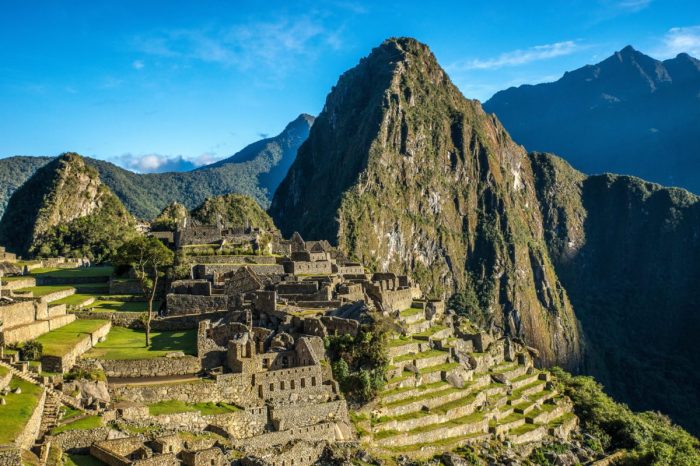
The Inca Empire, despite its relatively short reign, left an indelible mark on the landscape and culture of Peru. Its sophisticated engineering, intricate social structures, and unique worldview continue to resonate in modern Peruvian society, shaping its national identity and attracting millions of tourists annually. The legacy of the Inca is not merely a historical curiosity; it’s a living, breathing part of Peru’s present.The enduring influence of the Inca is multifaceted.
Their agricultural techniques, particularly terracing, are still practiced in modified forms in the Andes. Quechua, the language of the Inca, remains widely spoken, a testament to the empire’s linguistic impact. Moreover, many aspects of Peruvian art, music, and religious practices retain echoes of Inca traditions, demonstrating a continuous cultural thread connecting the past to the present. The very fabric of Peruvian identity is woven with Inca threads.
Inca Ruins and Sacred Sites: Modern Interpretations
Today, Inca ruins and sacred sites are viewed as more than just remnants of a bygone era. They are powerful symbols of Peru’s rich history and a source of national pride. Archaeological research continues to shed light on Inca life, revealing new insights into their societal organization, religious beliefs, and technological advancements. These sites are not simply passive objects of study; they are active sites of interpretation, constantly being re-evaluated and re-contextualized in light of new discoveries and evolving perspectives.
For example, the recent discoveries at Machu Picchu continue to reshape our understanding of the site’s purpose and significance. Furthermore, the sites are managed and preserved with an understanding of their importance to both the national and global community.
The Role of Inca Sites in Shaping National Identity and Tourism
Inca ruins and sacred sites play a pivotal role in shaping Peru’s national identity and driving its tourism sector. Machu Picchu, in particular, has become a global icon, synonymous with Peru itself. The government actively promotes these sites as key components of the nation’s cultural heritage, investing in their preservation and accessibility. This strategic approach not only safeguards the historical record but also contributes significantly to the Peruvian economy, generating employment and revenue through tourism.
The sites serve as powerful reminders of the Inca’s achievements and a testament to the enduring spirit of Peru. The careful management of these sites ensures their continued contribution to the national identity and economy, balancing the need for preservation with the benefits of tourism.
A Hypothetical Museum Exhibit: Echoes of the Inca Empire
The following Artikels a hypothetical museum exhibit designed to showcase the richness and complexity of Inca culture and history. The exhibit aims to be engaging and informative, employing a multi-sensory approach to immerse visitors in the world of the Inca.The exhibit would be organized chronologically, starting with the origins of the Inca and culminating in the Spanish conquest. Interactive displays, multimedia presentations, and carefully curated artifacts would bring the Inca world to life.
- Section 1: The Rise of the Inca: This section would showcase the early history of the Inca, their expansion, and their sophisticated political and administrative systems. Artifacts might include early pottery, textiles, and tools, alongside maps illustrating the empire’s growth. A large-scale model of Cusco, the Inca capital, would provide a visual representation of the city’s layout and importance. Interactive displays could simulate Inca record-keeping using quipu.
- Section 2: Inca Society and Daily Life: This section would explore the social structure of the Inca Empire, focusing on the roles of different social classes and the daily lives of ordinary people. Artifacts could include examples of Inca clothing, jewelry, and tools used in agriculture and construction. A recreation of a typical Inca dwelling would allow visitors to experience the domestic environment. Videos depicting Inca agricultural techniques and daily routines would enhance the experience.
- Section 3: Inca Religion and Beliefs: This section would delve into the religious beliefs and practices of the Inca, focusing on their cosmology, rituals, and the role of the Inca emperor as a religious leader. Artifacts could include religious objects, such as ceremonial vessels and figurines, alongside detailed explanations of Inca mythology and religious ceremonies. A diorama depicting a religious festival would provide a visual representation of Inca religious practices.
Audio recordings of traditional Andean music would add an auditory dimension to the exhibit.
- Section 4: Inca Engineering and Technology: This section would showcase the Inca’s remarkable engineering achievements, such as their sophisticated road system, irrigation canals, and impressive stonework. Artifacts could include examples of Inca stone tools and architectural models of Inca structures, highlighting their precision and ingenuity. Interactive displays could illustrate the principles of Inca engineering and their impact on the landscape. Detailed diagrams of Inca constructions, like Sacsayhuamán, would illustrate the complexity of the structures.
- Section 5: The Spanish Conquest and its Aftermath: This section would explore the Spanish conquest of the Inca Empire and its lasting impact on Peruvian society and culture. Artifacts could include examples of Spanish weaponry and artifacts alongside Inca objects that survived the conquest. The section would also address the cultural syncretism that followed, showcasing how Inca traditions blended with Spanish influences. Detailed maps showing the Spanish expansion and the impact on Inca territories would illustrate the events of the conquest.
Luxury Travel Experiences Related to Inca Sites
Exploring the majestic Inca ruins and sacred sites can be an unforgettable experience, and for the discerning traveler, luxury options elevate this journey to an unparalleled level. These high-end packages cater to those seeking exclusive access, personalized service, and an immersive cultural experience beyond the typical tourist trail. The focus is on creating seamless and sophisticated travel, blending comfort, adventure, and cultural immersion.
High-End Travel Packages to Inca Sites
Luxury travel packages to Inca sites typically include meticulously crafted itineraries, encompassing premium accommodations, private transportation, and expert-led guided tours. These packages often feature stays in five-star hotels in Cusco or nearby towns, offering breathtaking views of the Andes Mountains and unparalleled comfort. Transportation might include private chartered flights, eliminating long travel times and offering stunning aerial perspectives of the landscape.
Guided tours are led by highly knowledgeable archaeologists or historians who provide insightful commentary and ensure a deeply enriching experience. Many packages offer exclusive access to specific sites or experiences, further enhancing the exclusivity. For example, a package might include a private tour of Machu Picchu at sunrise, before the crowds arrive, allowing for a more contemplative and personal exploration.
Exclusive Travel Experiences
Several exclusive travel experiences are available for those seeking unparalleled access and personalized service. Private helicopter tours offer breathtaking views of the Sacred Valley and the surrounding Andes, allowing travelers to appreciate the scale and grandeur of the Inca empire from a unique perspective. Imagine soaring over the Urubamba River, witnessing the intricate agricultural terraces carved into the mountainside, and landing at a remote archaeological site for a private exploration.
Some high-end tour operators offer access to restricted areas of Machu Picchu or other sites, allowing for a more intimate encounter with these historical wonders. This might include visiting less-frequented areas of the site or accessing research facilities. These exclusive experiences are typically arranged with prior permissions and involve higher costs, reflecting the exceptional level of access and personalization.
Luxury Travel Accessories for Inca Site Visits
To fully appreciate the journey to Inca sites, certain luxury travel accessories can significantly enhance the experience. High-quality trekking gear, such as lightweight and durable hiking boots, breathable clothing, and advanced weather protection, is essential for comfort and safety during explorations. Specialized cameras, including high-resolution digital cameras or professional-grade video equipment, allow travelers to capture the stunning scenery and intricate details of the Inca ruins.
Binoculars with high magnification capabilities are useful for observing wildlife and appreciating the panoramic views. A high-quality travel journal and pen set allows for personal reflection and documentation of the journey.
Sample Luxury Travel Itinerary: Exploring Inca Sites
This itinerary focuses on a seven-day luxury journey to explore key Inca sites, combining high-end accommodations, exclusive experiences, and a luxurious train journey.
| Day | Activity | Accommodation |
|---|---|---|
| Day 1 | Arrival in Cusco, transfer to the Belmond Palacio Nazarenas (luxury hotel), acclimatization walk | Belmond Palacio Nazarenas, Cusco |
| Day 2 | Sacred Valley exploration: Pisac market and Ollantaytambo ruins, private guided tour | Sol y Luna (luxury hotel), Sacred Valley |
| Day 3 | Luxury train journey to Aguas Calientes (Machu Picchu Pueblo), check into the Belmond Hiram Bingham hotel | Belmond Hiram Bingham, Aguas Calientes |
| Day 4 | Private sunrise tour of Machu Picchu, guided exploration of the site | Belmond Hiram Bingham, Aguas Calientes |
| Day 5 | Hike Huayna Picchu or Machu Picchu Mountain (optional, subject to permit availability), afternoon exploring Aguas Calientes | Belmond Hiram Bingham, Aguas Calientes |
| Day 6 | Luxury train journey back to Ollantaytambo, transfer to Cusco | Belmond Palacio Nazarenas, Cusco |
| Day 7 | Departure from Cusco | N/A |
Private Island Vacations and High-End Travel
Exploring the majestic Inca ruins and embarking on a private island escape represent two distinct yet equally luxurious travel experiences. Both cater to discerning travelers seeking unique and unforgettable adventures, but they offer vastly different approaches to relaxation, exploration, and immersion in diverse environments. The choice between these experiences depends largely on the traveler’s priorities and preferences.
Comparison of Inca Ruins and Private Island Vacation Experiences
A visit to Inca ruins, such as Machu Picchu, offers a journey through history and culture. Travelers are immersed in the rich tapestry of the Inca civilization, exploring ancient architecture, breathtaking landscapes, and pondering the mysteries of a lost empire. The experience is active, requiring hiking, potentially navigating challenging terrain, and engaging with historical information. In contrast, a private island vacation emphasizes relaxation and seclusion.
Days are typically spent enjoying pristine beaches, crystal-clear waters, personalized service, and a range of luxurious amenities. The focus is on rejuvenation and escaping the stresses of daily life. While both experiences offer a high level of luxury, the nature of that luxury differs significantly.
Target Audience for Each Travel Experience, Inca ruins and sacred sites
Inca site visits appeal to history buffs, adventure travelers, and those seeking culturally enriching experiences. The target audience is often active, interested in learning, and comfortable with a degree of physical exertion. They are drawn to the unique historical significance of the sites and the stunning natural beauty of their surroundings. Private island vacations, on the other hand, attract individuals and couples seeking ultimate relaxation and privacy.
This audience typically values personalized service, exclusive amenities, and an escape from the everyday world. They prioritize tranquility, luxury, and personalized attention to detail.
Key Factors Contributing to Luxury in Both Experiences
Luxury in Inca site visits is defined by exclusive access, personalized guided tours with expert historians, private transportation, high-end accommodation in nearby luxury hotels, and curated experiences such as private dining amidst breathtaking views. The emphasis is on creating an immersive and unforgettable journey that transcends a typical tourist experience. Luxury in private island vacations is characterized by unparalleled privacy, personalized service from dedicated staff, access to exclusive amenities such as private chefs, butlers, and water sports equipment, and luxurious accommodations with stunning ocean views.
The focus is on creating an experience of ultimate relaxation and personalized indulgence.
Luxury Travel Brochure: “Unforgettable Journeys”
Imagine a world where ancient wonders meet unparalleled luxury. Unforgettable Journeys offers exclusive experiences, blending the historical majesty of the Inca Empire with the serene bliss of private island escapes.
Discover Machu Picchu’s Majesty:
A meticulously crafted journey to the Lost City of the Incas. Explore the breathtaking ruins, hike the Inca Trail (optional), and enjoy exclusive access to hidden viewpoints. Stay in a luxurious lodge overlooking the Sacred Valley, savoring exquisite cuisine and personalized service. Our expert guides will illuminate the rich history and cultural significance of this extraordinary site.
Imagine a sunrise over Machu Picchu, the mist clinging to the ancient stones, the air alive with the echoes of a lost civilization. This is an experience that will stay with you forever.
Escape to Paradise: Your Private Island Retreat:
Indulge in the ultimate escape on your own private island sanctuary. Imagine pristine white sand beaches, turquoise waters teeming with vibrant marine life, and luxurious villas designed for ultimate privacy and relaxation. Enjoy personalized service from your dedicated staff, savor gourmet meals prepared by a private chef, and unwind with a rejuvenating spa treatment. Spend your days swimming, snorkeling, diving, or simply basking in the sun.
Let the worries of the world melt away as you embrace the tranquility of paradise.
Book Your Unforgettable Journey Today:
Contact us to design your bespoke itinerary. We specialize in crafting exceptional experiences that cater to your unique desires. Experience the best of both worlds: the thrill of discovery and the serenity of escape.
A journey through Inca ruins and sacred sites is a journey through time, revealing a civilization that harmoniously blended engineering prowess with deep spiritual beliefs. The enduring legacy of the Inca Empire is not merely reflected in the stones themselves, but also in the vibrant culture of modern Peru. These sites serve as powerful reminders of a remarkable past, inspiring awe, wonder, and a deeper understanding of human ingenuity and resilience.
Preserving these treasures for future generations is paramount, ensuring that the story of the Inca civilization continues to resonate for centuries to come.
FAQs
What is the best time of year to visit Inca ruins?
The dry season (May to September) offers the best weather for exploring Inca sites, with less rainfall and clearer skies.
How can I get to Machu Picchu?
You can reach Machu Picchu by train from Cusco or by trekking the Inca Trail (permit required).
Are there any altitude sickness precautions I should take?
Acclimatize to the altitude gradually, stay hydrated, and avoid strenuous activity upon arrival. Consult your doctor about altitude sickness medication if needed.
What should I pack for a trip to Inca ruins?
Pack comfortable hiking shoes, layers of clothing, rain gear, sunscreen, a hat, insect repellent, and a water bottle.